“Yoga is so boring!”
“It’s too slow!”
That was the welcome yoga received on its first day in my first-grade classroom. The children wanted GoNoodle or Danny Go—music they could jump to, characters they could shout along with. I stood before a roomful of frowning faces, and a familiar classroom phrase rose to my lips: You get what you get, and you don’t throw a fit.
For a few seconds, I said nothing.
I was beginning to wonder if they were right. If they didn’t even want to try yoga, what made me think it could help them slow down?
For years, I had used dance videos for movement breaks. After sitting through a lesson, the children needed to get up. The music came on, they leapt to their feet, and I loved watching them have fun.
Then the music ended.
Their bodies still seemed full of the song. Some kept moving; others talked over one another, excited by what they had just done. Meanwhile, the next lesson was waiting. I wanted them to have those joyful minutes, but I also needed them to find their way back to their seats. For a long time, I thought the question was how to settle the room faster. But watching the children struggle to come down from all that excitement, I began to wonder: Had I taught them how to step on the gas, then expected them to know how to hit the brakes?
I wanted to try a movement break that offered both—the chance to move and a moment afterward to notice what their bodies were doing.
Around that time, I read Bessel van der Kolk’s The Body Keeps the Score. He writes about body awareness and about people who have experienced trauma learning, through practices such as yoga, to feel their breathing, heartbeat, and other sensations again. One idea stayed with me: interoception, the ability to recognize signals from within the body.
The experiences in his book were far removed from a classroom full of children coming down from a dance video. Still, I kept thinking about my students. I could tell a child to calm down, and sometimes I had to. But if they were still learning to recognize the feeling of an excited body, had I shown them how to reach the calm I was asking for?
I could ask them to sit and lower their voices. Those expectations mattered. I also wanted to give them something they could practice: noticing the floor beneath their feet, the rise of a belly with an inhale, a heartbeat that had quickened and might begin to slow. Perhaps, in time, they could find words for those sensations.
That was how I arrived at Cosmic Kids Yoga. Its videos told stories and featured characters the children knew. I thought the story would draw them in.
Instead, I heard, “Too boring!” and “Too slow!”
I was still weighing that you get what you get line when I noticed three children already sitting cross-legged, waiting. I pointed to them, called them by name, and praised them for being open-minded and brave enough to try something new.
“Who else is ready?”
The three children sat a little taller. Then hands began to rise across the room.
“I’m ready!”
“Me too!”
Two or three children stayed in their seats, but the room had changed.
Looking back, I think I needed that pause as much as the children did. I had been so intent on getting everyone to accept my plan that I nearly missed the ones who were ready to begin.
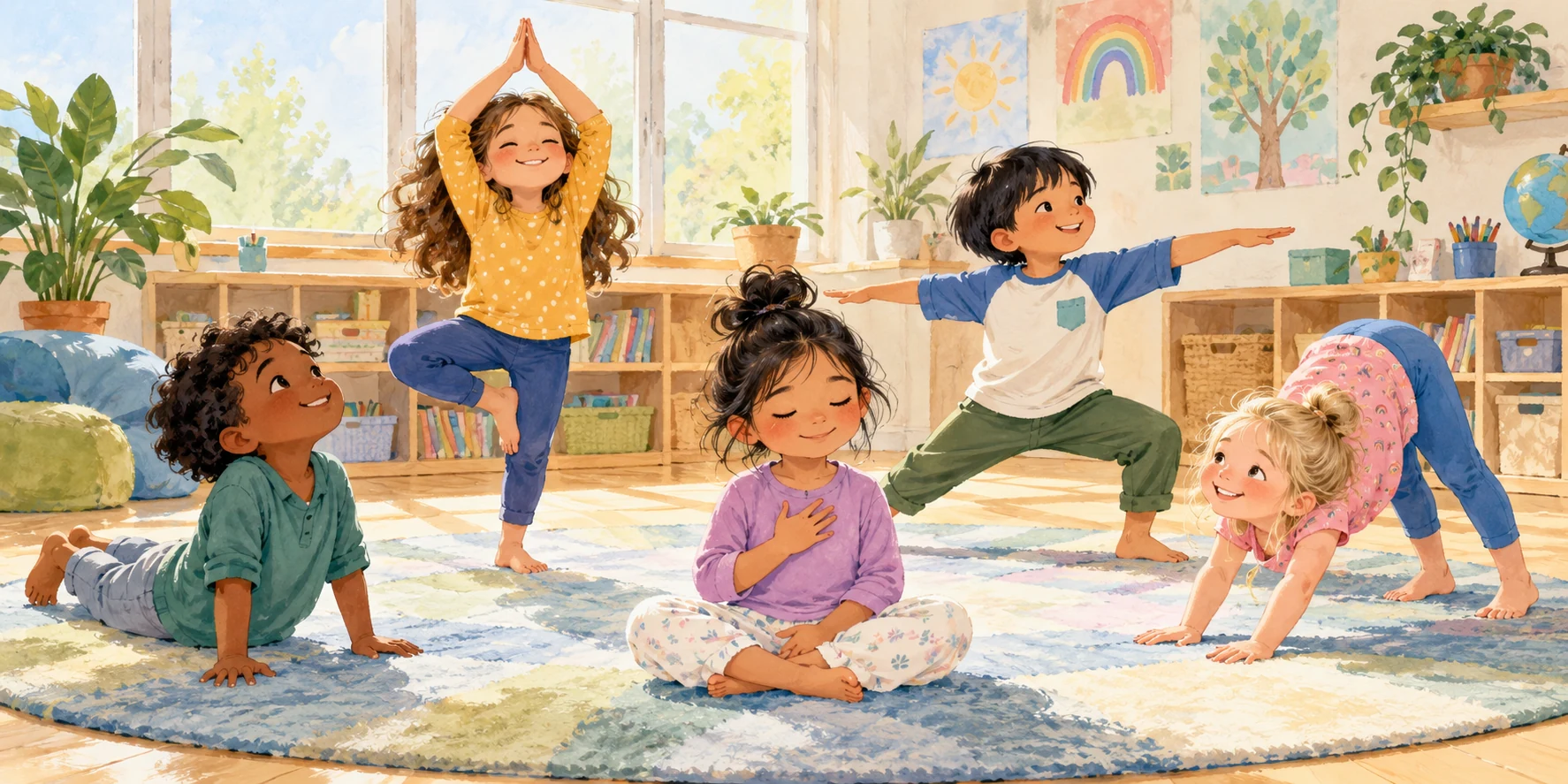
Then I added a rule: anyone joining yoga could take off their shoes and socks. That brought another burst of excitement. One by one, the children settled onto the rug, barefoot and grinning, as though an adventure were about to begin.
The video opened, and even the children who had stayed in their seats watched closely.
Our first story was about Batman. The children rose with the instructor and became little Batmen themselves, trying out superhero moves as they made their way through the adventure. When it ended, they folded their legs beneath them again, pressed their palms together, bowed their heads, and said “Namaste” in unison.
Only moments earlier, they had been saving the world. Now their faces were so solemn that I had to keep myself from laughing.
By the next day, most of them were waiting for yoga. At the first notes of the Cosmic Kids Yoga music, shoes and socks came off, and the children hurried to claim a spot on the rug. I had expected to spend weeks persuading them to try something slower than a dance video. The stories had done much of the inviting. Soon, they looked forward to those ten barefoot minutes.
The children who chose not to do the movements still watched from their seats. I wanted them to come over. But I couldn’t know what they were thinking as they watched, or when they might feel ready. For now, I could leave room for them.
One child, in particular, has surprised me these past four weeks. Learning and being with other children can be hard for them, and they often need extra support. On many days, helping them sit with the class or join a group activity takes considerable thought and effort.
From the first day, though, they were drawn to yoga. Whenever the music starts, they are the first to take off their shoes and socks. I watch their curious expression as they work to hold each pose. An activity they might otherwise struggle to join has become one they step into on their own.
Sometimes I watch them and feel my chest grow warm, my eyes begin to fill. I had hoped yoga might help the class settle before the next lesson. I hadn’t expected these ten minutes to give them something they so plainly enjoyed doing alongside everyone else. I’m grateful for that small part of the day.
As yoga became familiar, I began asking the children to notice their bodies between movements. We put a hand on our bellies and breathe in for a count of three. Then we imagine a bowl of hot soup in front of us and blow gently to cool it. I ask what the rug feels like beneath their feet, or whether their hearts feel different after moving.
I don’t know what they notice each time. I don’t always know what my own body is telling me. But I want them to discover that they can pause, even for a moment, and ask: What am I feeling right now?
Last week, after yoga, I asked the class to feel their heartbeats.
“Do you notice any change?”
One child put a hand to their chest and answered at once. “It’s slower!”
A few others echoed, “Slower!”
Something stirred in me. For weeks, I had held this quiet hope that the children might begin to notice what was happening inside them. Hearing that child answer, I felt the hope touch ground.
Perhaps the other children were only echoing their classmate. One moment couldn’t tell me whether yoga had changed their attention or helped them manage their emotions. But the child had stopped, felt a heartbeat, and found words for it. For the first time, I could see a small part of what I had hoped we might practice.
Four weeks in, I can’t yet say that the children focus better after yoga. I still have to help them set aside their excitement for the next lesson. A few still watch from their seats.
I hope that one day, when their hearts race or their feelings rise, they’ll recognize something of what is happening inside them. I don’t know whether these ten minutes will help them get there.
Tomorrow, when the music begins, I’ll see who takes off their shoes first and who stays where they are. I have the rest of the school year to keep trying, keep asking, and listening to their answers.
Reader conversation
Join the conversation
Share what this essay brought up for you—your experiences, questions, or a different perspective.