I have become increasingly optimistic about AI, especially its potential to support and transform learning.
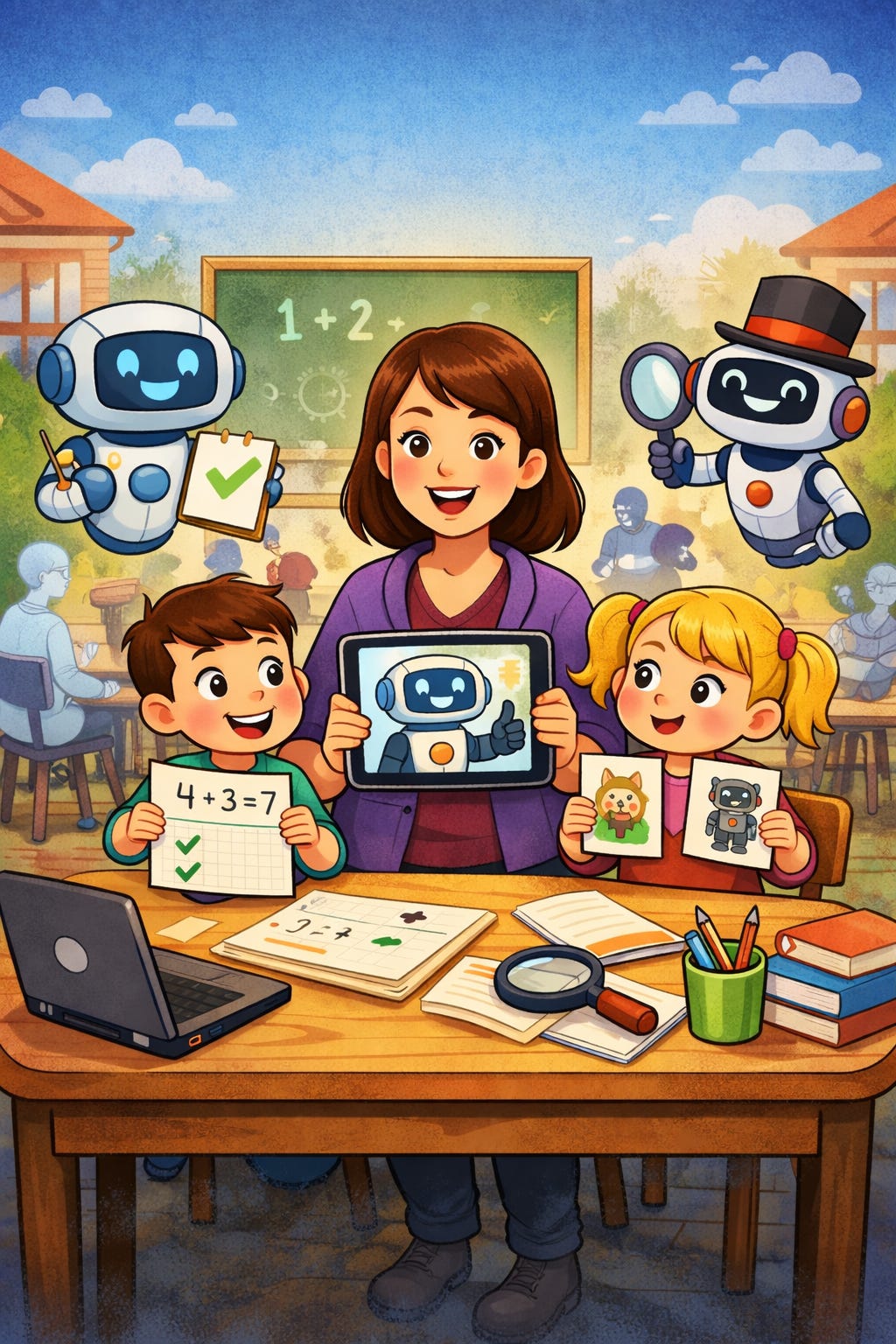
Over the past year, I have been exploring how AI can make personalized learning more possible in a real classroom. One way I have already started using it is by generating feedback to help my first graders reflect on their math work. I give the AI clear parameters so it knows which standards to focus on and what kind of feedback to provide. What has amazed me most is seeing how each child can receive immediate, specific guidance—and how that alone can spark a new level of motivation.
There was one moment that truly stayed with me. Some of my students redid the same math problem four or five times, simply because they wanted to fully meet the standard. I was stunned. As a teacher, I have worked hard for years to encourage persistence, but I had rarely seen that kind of determination appear so naturally. It made me realize something important: when we say children “aren’t motivated,” often it is not because motivation is missing. More often, it is because we have not yet found the right key to unlock it.
As teachers, we have always known how powerful one-on-one attention and immediate feedback can be. But in reality, we are one person in a room full of children, trying to respond to academic needs, emotions, behavior, and encouragement all at once. So many times, I have wished I could somehow multiply myself—so every child could feel seen and supported in the exact moment they needed it. What excites me about AI is that, in some ways, it offers us a glimpse of that possibility. Not because it can replace us, but because it can extend our reach.
And yet, I believe even more strongly that the human part of teaching can never be replaced. The heart of teaching has always been deeply human: building trust, creating meaningful learning experiences, noticing the quiet child, encouraging the discouraged one, and helping each student believe in their own growth. AI cannot love a child, understand the full depth of a classroom, or replace the relationship between teacher and student. But it can lighten parts of our load, giving us more room to focus on the things that matter most—creativity, connection, and the deeper work of teaching.
I have also started introducing AI literacy to my kindergarteners. Sometimes I show them two pictures—one made by a person and one generated by AI—and ask them to guess which is which and explain their thinking. It has been delightful to watch them become little “AI detectives.” They are curious, observant, and often much quicker than adults expect.
What fascinates me even more is that even my youngest students are already noticing how fast AI is changing. They have learned that clues like “too many fingers” do not always work anymore, and they understand that they will need to keep sharpening their eyes and minds. I hope that by learning this early, they will grow up a little more prepared—less easily fooled, more thoughtful, and more aware of the power of the technology around them.
I know there are real concerns about children using AI, and I share many of them. It is right to ask hard questions. It is right to worry about whether AI could weaken original thinking, reduce struggle, or become a shortcut where real learning should happen. These concerns matter, and they should make us more thoughtful and intentional. But I do not believe fear should keep us from exploring the possibilities of a tool that is already reshaping our world.
AI is not some distant future. It is already here, already changing how we work, communicate, and learn. By the time our students grow up, the world they enter will likely be very different from the one we know now. I believe we have a responsibility to prepare them for that world—not just by teaching them how to use AI, but by teaching them how to think about it, question it, and use it wisely.
At the deepest level, I believe children, like all human beings, want to do things well. They want to grow. They want to become smarter, kinder, and more capable versions of themselves. Our role is to guide them—to help them understand both the power and the limitations of AI, so they can make thoughtful choices with knowledge, confidence, and integrity.
Reader conversation
Join the conversation
Share what this essay brought up for you—your experiences, questions, or a different perspective.