If apologizing as a teacher is a return to professional clarity, then apologizing as a mother is something deeper: a quiet dismantling of power.
In an age obsessed with efficiency, parenting often feels like a race against the clock. And when we are rushing the hardest, we are often the most likely to step across our children’s boundaries.
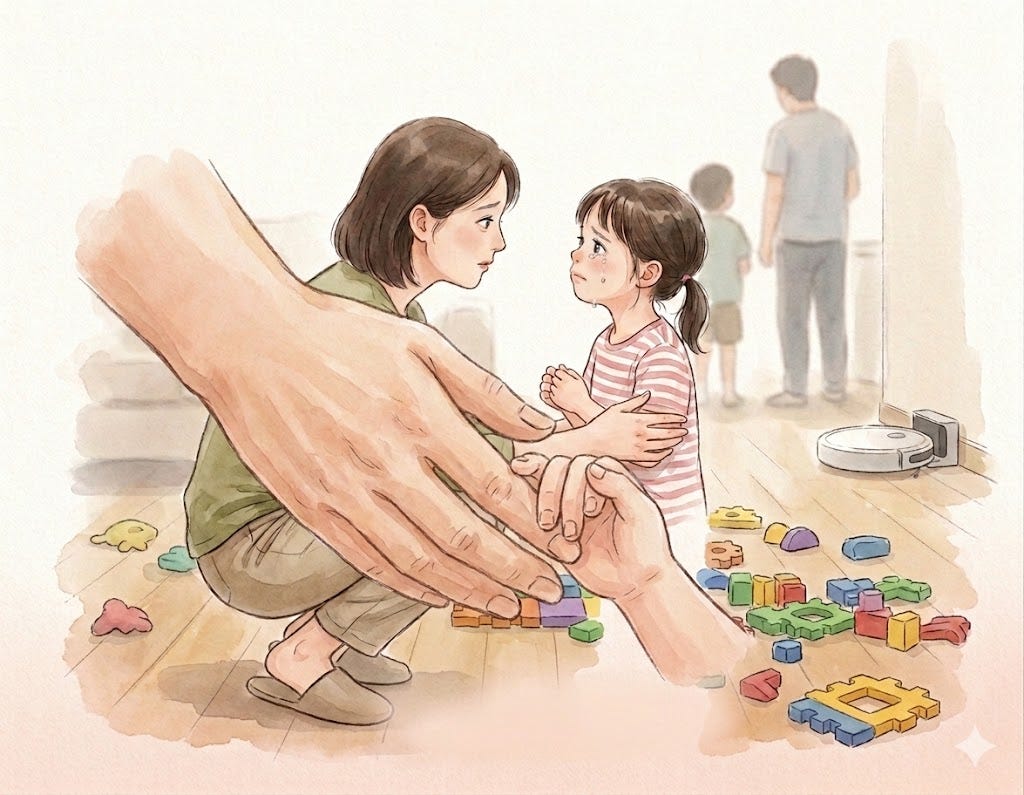
One evening, the living room floor was covered in toys. My husband and I stood nearby, watching our two children move distractedly through the mess, making almost no real progress. As the seconds passed, our patience wore thin. What began as reminders quickly turned into pressure.
“Hurry up and clean up, or the monster will come tonight and take all your toys away!”
My husband even pointed to the robot vacuum nearby and said, half joking and half threatening, “If you don’t clean up now, the robot is going to start and chew all the toys to pieces!”
Under that cloud of pressure, our five-year-old daughter finally broke down.
Instead of obeying the way she usually did, she stood in the middle of the mess and sobbed. Then she said something that still rings in my ears:
“Daddy doesn’t give us enough time to clean up! Grown-ups have big hands, so they can clean up fast. But little kids have little hands. If you want us to do it fast, then grown-ups need to help!”
I froze.
It felt as though all the anger in me had been extinguished in an instant, replaced by a deep wave of shame. I had been measuring the world with a grown-up’s stride, forgetting that she was still trying to keep up with small steps.
So I did something I have been doing more and more often these days: I crouched down until I was at eye level with her.
“I’m sorry, sweetheart,” I said softly. “Mommy and Daddy were rushing you too much. We didn’t give you enough time. But you really were trying, weren’t you?”
She paused, lips still trembling, sniffed hard, and nodded.
In that moment, I took a deep breath and tried to soothe the hurt my impatience had caused.
“Sweetheart, Mommy and Daddy are still learning how to be calmer and more patient too. Let’s keep reminding each other, and grow together, okay?”
I used to think apologizing would weaken my authority as a parent. Now I understand that real authority never comes from fear.
As Michaeleen Doucleff writes in Hunt, Gather, Parent, parenting begins to change when we stop trying to control children and start working with them. The moment we recognize something as simple and physical as this—grown-ups have big hands, and children have small ones—we begin to enter a more collaborative, more humane way of being together.
Whether I am standing in front of my students or kneeling in front of my own child, I have found the same truth: the more often I apologize, the closer our hearts become.
Because an apology says something simple, but powerful:
I see your effort.
And I see my own limitations too.
References and Further Reading
Michaeleen Doucleff, Hunt, Gather, Parent: What Ancient Cultures Can Teach Us About the Lost Art of Raising Happy, Helpful Little Humans (2021)
This book offers a rich and thoughtful exploration of collaborative parenting and respectful guidance. It reminds us that true education is not about control, but about seeing children as capable and valued contributors within the family.
“The Longer I Teach, the More Often I Apologize to My Students”(Another article I posted here)
A reflection on how apologizing in the classroom can build deeper trust with students, shifting the goal from winning against them to truly winning their trust.
Reader conversation
Join the conversation
Share what this essay brought up for you—your experiences, questions, or a different perspective.