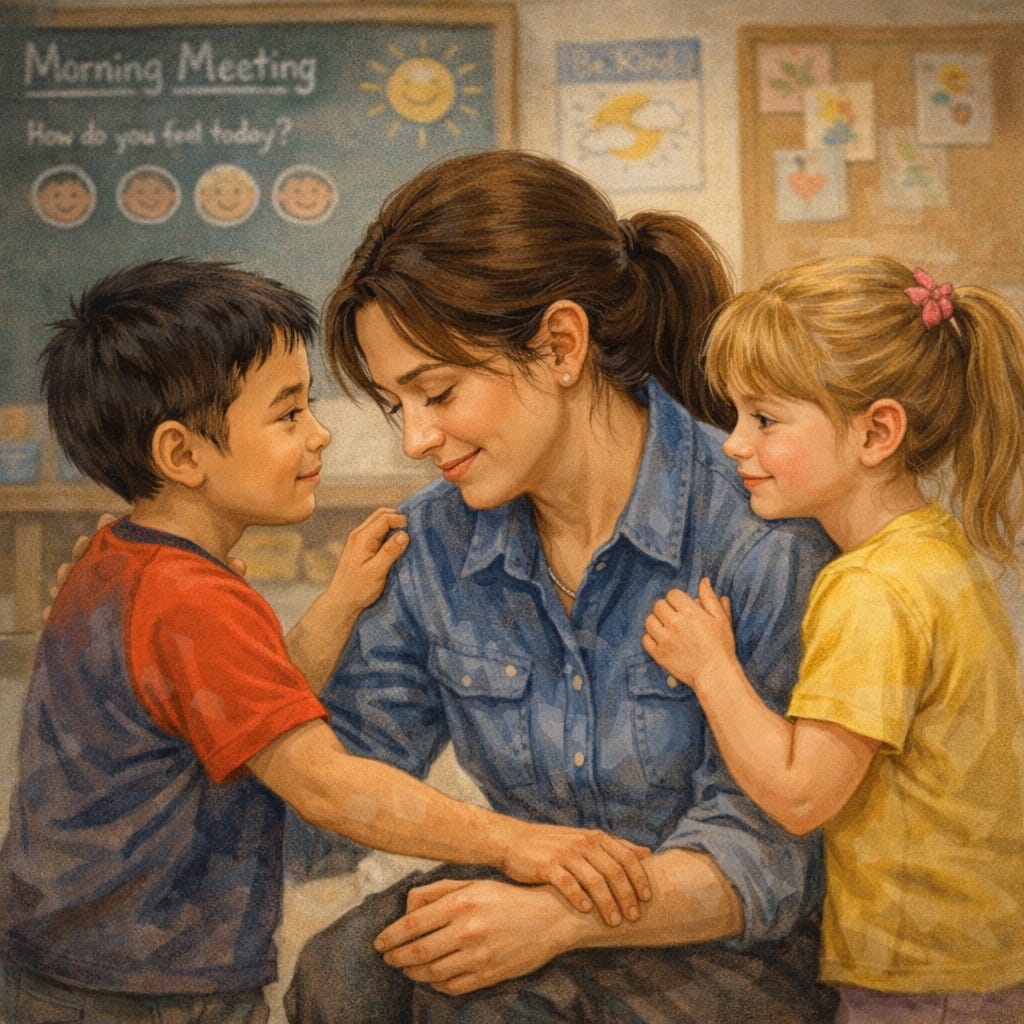
Recently, I’ve discovered something rather ironic about myself: the longer I teach, the more often I apologize to my students.
A few days ago, two of my kindergarteners were especially full of mischief. During Morning Meeting, they kept whispering to each other while another child was sharing. Then, when it was time to line up, they were giggling, jostling, and clearly not interested in keeping their hands—or their bodies—to themselves. I reminded them several times, but my words seemed to float right past them. Eventually, I snapped. I raised my voice, told them to stop in my most serious teacher tone, and declared my disappointment with great conviction. To top it off, I threatened that if they didn’t straighten up, they would not get to line up with the rest of the class for breakfast.
And, of course, that worked.
They fell into line immediately.
And I regretted it immediately.
The moment those words left my mouth, I knew I had chosen the worst kind of classroom management shortcut: the kind that may produce quick compliance, but offers no real guidance, no dignity, and no lasting good. It may stop the behavior for a moment, but it does not help a child grow.
So while the students were eating breakfast, I went to those two children and apologized, one by one, with all the seriousness I hoped they deserved. I told them that yelling when I was frustrated was not a good choice, and that even adults—yes, even teachers—still have to practice how to stay calm when we have big feelings. Then I asked whether they would help me think of better ways: how they might listen carefully when someone else is speaking, and how they could remember to keep an appropriate distance while lining up.
To my relief, both children accepted my apology with surprising sincerity. They told me they forgave me. Even more moving, they thoughtfully came up with several ideas of their own for how to manage their behavior better—and said they wanted to try them right away.
As I stood there, feeling both humbled and grateful that I had at least managed to repair a small piece of the harm I had caused, I found myself returning to a truth I’ve noticed more and more over the years: the longer I teach, the more often I apologize to my students.
Was I somehow more composed when I was a newer teacher? Not at all. In fact, when I had less experience, I probably made mistakes like this far more often. The difference is that back then, I didn’t always recognize them for what they were. And for me, the journey from failing to see my mistakes, to seeing them clearly, to naming them, apologizing for them, and trying to do better, has taken nearly ten years.
It has gone something like this:
Phase One: I don’t realize I’m wrong, and I blame the students.
Phase Two: I realize I’m wrong, and I spiral into regret, frustration, and self-doubt.
Phase Three: I realize I’m wrong, reflect deeply, and resolve to do better next time.
Phase Four: I realize I’m wrong, apologize right away, and reflect with my students so that we can grow together.
Maybe that is one of the quietest signs of growth as a teacher: not that we stop making mistakes, but that we learn to recognize them sooner, repair them more honestly, and let our students witness what it looks like to keep learning, even as grown-ups.
Reader conversation
Join the conversation
Share what this essay brought up for you—your experiences, questions, or a different perspective.